Showcase 5 Powerful Founder / CEO Women

Judith Faulkner – Founder/CEO, Epic Systems
Lynda Weinman – Founder/CEO, Lynda.com
Shira Goodman – CEO, Staples.com
Helen Greiner – Co-founder, iRobot
Kelsey Wirth – Co-founder, Align Technologies

http://techcrunch.com/2019/05/03/dear-hollywood-here-are-five-female-founders-to-showcase-instead-of-elizabeth-holmes/

Educational CyberPlayGround NetHappenings 5-4-19

Ghidra, a public reverse-engineering tool developed by the National Security Agency

The source code is available for download at ghidra-sre.org along with the 9.0.2 patch.

NSA’s Ghidra Reverse Engineering Framework Stirs Up Malware Researchers

The National Security Agency released a free, public version of Ghidra, a set of tools developed internally for software reverse engineering. The agency will also release Ghidra’s source code, allowing users to improve the framework’s feature set and turn it into a more effective tool.

Ghidra became known in the security community after WikiLeaks published the “Vault 7” documents, which referenced it as a reverse engineering tool created by the NSA’s Research Directorate, among hacking tools used by the Central Intelligence Agency.

If you’re wondering why the NSA made these tools available, senior advisor for the NSA Robert Joyce said the move was powered by the need to improve cybersecurity tools, to build a community, to educate new talent, and to show what the agency uses the tax money for.

Of course, since this is what the agency uses internally for reversing engineering software, opening it to a larger audience means that NSA can have it improved with code from contributors.

NSA rolled out a version of Ghidra for the public, available for macOS, Windows, and Linux on a dedicated website. A GitHub repository is also present, where the code is expected to be published. Joyce spoke (slides here) about how the toolkit can be used and discussed its strong points.

HACKING ETHICS Google: Book 
1 • 2 • 3 • 4 • 5 • 6 • 7 • 8 • 9 • 10 • 11 •

https://www.businessinsider.com/well-these-new-zuckerberg-ims-wont-help-facebooks-privacy-problems-2010-5

This Business Insider article was originally published May 13, 2010
Facebook CEO Mark Zuckerberg and his company are suddenly facing a big new round of scrutiny and criticism about their cavalier attitude toward user privacy.
An early instant messenger exchange Mark had with a college friend won’t help put these concerns to rest.
According to SAI sources, the following exchange is between a 19-year-old Mark Zuckerberg and a friend shortly after Mark launched The Facebook in his dorm room:
Zuck: Yeah so if you ever need info about anyone at Harvard
Zuck: Just ask.
Zuck: I have over 4,000 emails, pictures, addresses, SNS
[Redacted Friend’s Name]: What? How’d you manage that one?
Zuck: People just submitted it.
Zuck: I don’t know why.
Zuck: They “trust me”
Zuck: Dumb fucks.

An algorithm wipes clean the criminal pasts of thousands

“When we started to do this by hand, we recognised very rapidly that this was going to take a long time.” He enlisted Code For America, a non-profit organisation that works on creating Silicon Valley-esque solutions to problems within the many antiquated systems powering the US government. The group had made Clear My Record, a tool that can analyse text in court files, using character recognition to decipher scanned documents. It discards any record involving a violent crime, as such records do not qualify. For those that remain, the tool automatically fills out the necessary paperwork. In other words, the algorithm replaced the process being done manually at the expungement clinics.


REVERSE ENGINEERING AN INSULIN PUMP WITH AN SDR AND DECAPPING

Reverse Engineering An Insulin Pump With An SDR And Decapping



Facebook Responds to Global Coalition’s Demand That Users Get a Say in Content Removal Decisions

This Business Insider article was originally published May 13, 2010

Facebook CEO Mark Zuckerberg and his company are suddenly facing a big new round of scrutiny and criticism about their cavalier attitude toward user privacy. An early instant messenger exchange Mark had with a college friend won’t help put these concerns to rest.

According to SAI sources, the following exchange is between a 19-year-old Mark Zuckerberg and a friend shortly after Mark launched The Facebook in his dorm room:

Zuck: Yeah so if you ever need info about anyone at Harvard
Zuck: Just ask.
Zuck: I have over 4,000 emails, pictures, addresses, SNS
[Redacted Friend’s Name]: What? How’d you manage that one?
Zuck: People just submitted it.
Zuck: I don’t know why.

Zuck: They “trust me”
Zuck: Dumb fucks.

#deletefacebook

#DeleteFacebook your info is breached again and again and again and again and again

https://www.businessinsider.com/well-these-new-zuckerberg-ims-wont-help-facebooks-privacy-problems-2010-5

Mercer, Zuckerberg, Sandberg, Page, Brinn, Dorsey Handmaidens to Authoritarism

Esteemed Reporter Carole Cadwalla takes down piece of shit Mark Zuckerberg at TedTalk

Years of Mark Zuckerberg’s old Facebook posts have vanished. The company says it ‘mistakenly deleted’ them.

Zuckerberg reportedly has a secret escape chute beneath his conference room

#Zuckerberg is a liar and the Congress is paid to Ignore this

A withering verdict: MPs report on Zuckerberg, Russia and Cambridge Analytica


EFF and more than 100 civil society organizations across the globe wrote directly to Mark Zuckerberg recently demanding greater transparency and accountability for Facebook content moderation practices. A key step, we told Facebook, is implementation of a robust appeals process giving all users the power to challenge and reverse the platform’s content removal decisions.

https://www.eff.org/deeplinks/2018/12/facebook-responds-global-coalitions-demand-users-get-say-content-removal-decisions


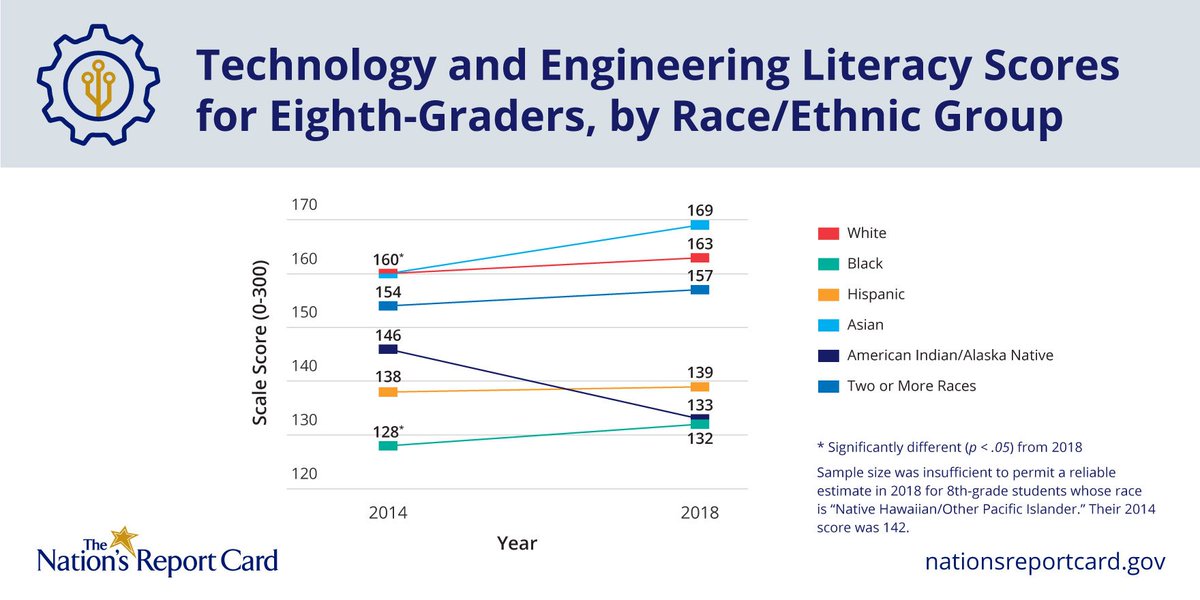
2018 National Assessment of Educational Progress (NAEP) in technology and engineering

2018 K12 NAEP Technology and Engineering Literacy (TEL)

https://twitter.com/naep_nces

Do U.S. students have the & skills and knowledge they need to succeed in the 21st century? Find out in the newly released NAEP Technology and Engineering Literacy Report Card.

Students who are literate in technology and engineering can use, understand, and evaluate technology. They can understand the technological principles and strategies that are needed to develop solutions and achieve goals. This includes students being able to use various technologies to communicate and collaborate.

Technology and engineering skills are an integral part of students’ everyday lives and will be critically important as they continue their educations and enter the workforce. Since technology is also integrated into other subjects, students require strong skills in this area to excel in all aspects of their coursework.

About the assessment
The computer-based assessment, administered to eighth grade public school students nationwide, asks students to complete collaborative, multimedia tasks and solve practical problems based in real-world contexts. It focuses on three major areas:

Technology & Society
Students’ understanding of the effects of technology on society and the natural world, which equips them to grapple with related ethical questions.

Design & Systems
Students’ understanding of engineering design processes, including basic aspects of managing everyday technology such as maintenance and troubleshooting.

Information & Communication Technology
Students’ ability to use technologies for accessing, creating, and communicating information, as well as facilitating creative expression.

ARTS https://www.nationsreportcard.gov/arts_2016/

Report Card 

Achievement Gaps Dashboard

State Profiles

State Performance Compared to the Nation: Data Table
Mathematics, Grade 4
Difference in average scale scores, percentage at or above Basic, percentage at or above Proficient, between all jurisdictions and National public, for All students [TOTAL], 2017

https://www.nagb.gov/naep-results/mathematics/2017-naep-reading-and-math-report.html

latest results