
FINANCIAL LITERACY
The Government can’t ban BTC but they can ban Gold
RICH AS HELL
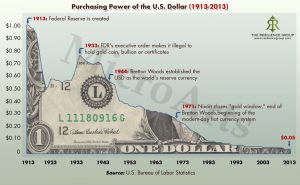
 1913
1913
The Federal Reserve System was established by President Woodrow Wilson in 1913. The premise used by President Wilson and his financial advisors for the establishment of the Federal Reserve System was to “supplant the dictatorship of the private banking institutions” and “to stabilize the inflexibility of national bank note supplies”. The previous system of banking was “feudal” in nature, in which private bankers control communities and could issue their own bank notes. They had little regulations concerning reserve assets and loan policies. Banking was a patch-quilt of institutions scattered across the face of the nation with no central policy.
The Federal Reserve Act (1913) required 40% gold backing of Federal Reserve Notes that were issued. The main rationale behind the order was actually to remove the constraint on the Federal Reserve preventing it from increasing the money supply during the depression.
1933 Executive Order 6102
The stated reason for the order was that hard times had caused “hoarding” of gold, stalling economic growth and worsening the depression as the US was then using the gold standard for its currency.
Executive Order 6102 is an executive order signed on April 5, 1933, by US President Franklin D. Roosevelt “forbidding the hoarding of gold coin, gold bullion, and gold certificates within the continental United States.” The executive order was made under the authority of the Trading with the Enemy Act of 1917 as amended by the Emergency Banking Act in March 1933.
The regulations prescribed in the executive order were modified by Executive Order 6111 on April 20, 1933, both of which were ultimately revoked and superseded by Executive Orders 6260 and 6261 on August 28 and 29, 1933, respectively.
On April 6, 1933, The New York Times wrote, under the headline Hoarding of Gold, “The Executive Order issued by the President yesterday amplifies and particularizes his earlier warnings against hoarding. On March 6, taking advantage of a wartime statute that had not been repealed, he issued Presidential Proclamation 2039 that forbade the hoarding ‘of gold or silver coin or bullion or currency’, under penalty of $10,000 fine or ten years’ imprisonment or both.The main rationale behind the order was actually to remove the constraint on the Federal Reserve preventing it from increasing the money supply during the depression.
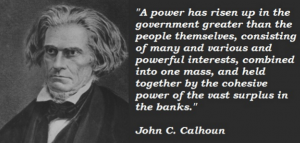
Frank Baum wrote The Wizard of Oz
THE WIZARD OF OZ IS THE STORY / ALLEGORY TOLD ABOUT MONEY
Henry Ford said, “It is well enough that the people of the nation do not understand our banking and monetary system, for if they did, I believe there would be a revolution before tomorrow morning.
Franklin Delano Roosevelt was a Boston Brahmin knew his grandfather Warren Delano was in the China opium drug smuggling business FDR – GREW UP HEARING STORIES ABOUT THE OPIUM SMUGGLING DRUG DEALING FAMILY BUSINESS !
Franklin D. Roosevelt’s fortune was inherited from his maternal grandfather, drug hustling pirate, Warren Delano.
The first Warren, had begun his career at sea at nineteen, ferrying cargoes of corn and salt, bathwood and potatoes to New Orleans and Liverpool and the Canary Islands.
Warren Delano II was born in 1809
Captain Warren Delano, was engaged in the opium trade, and his son Frederic A. Delano, was born in Hong Kong.
An uncle of Franklin D. Roosevelt, Delano was an original member of the Federal Reserve Board of Governors in 1914, and was later named by his nephew as Governor of the Federal Reserve Bank of Richmond. Delano’s wife’s sister married Ed Burling, who founded the Washington law firm of Covington & Burling, whose partners later included Dean Acheson and Donald Hiss, brother of Alger.
Covington, a Maryland congressman, had been appointed Chief Justice of the Supreme Court of Washington, D.C., by Woodrow Wilson as a reward for voting for the passage of the Federal Reserve Act. In 1918, Wilson appointed Covington as United States Railroad Commissioner
President Bush’s Grandfather Prescott Bush
Prescott Bush (who helped IBM and the Nazi trains run on time and hide money in Switzerland only stopped when the US government seized assets of Bush-connected companies in late 1942 under the Trading with the Enemy Act.
 Trading with the Enemy Act of 1917, which restricted trade with countries hostile to the United States.
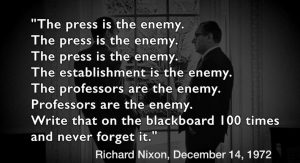 The Supreme Court upheld all seizures as constitutional, with Justices James Clark McReynolds, Willis Van Devanter, George Sutherland, and Pierce Butler dissenting. The four justices were labelled the “Four Horsemen” by the compliant press, as their conservative views were in opposition to Roosevelt’s New Deal supported by the press.
George Bush and Captain Prescott The Opium Smugglers
“This is an impressive crowd—the haves and the have-mores. Some people call you the elites; I call you my base.” — George W. Bush, campaign speech, October 2000
The Logan Act is about Conducting Foreign Relations Without Authority THE LOGAN ACT AS A CONSTITUTIONALLY ENFORCEABLE TOOL IN FOREIGN POLICY
1974
The limitation on gold ownership in the United States was repealed after President Gerald Ford signed a bill legalizing private ownership of gold coins, bars, and certificates by an Act of Congress, codified in Pub.L. 93–373, which went into effect December 31, 1974.
2021
The price of gold from the Treasury for international transactions was then raised by the Gold Reserve Act to $35 an ounce (equivalent to $733 in 2021). The resulting profit that the government realized funded the Exchange Stabilization Fund, established by the 1934 Gold Reserve Act.
The Gold Reserve Act of 1934 made gold clauses unenforceable and authorized the President to establish the gold value of the dollar by proclamation. Immediately following its passage, Roosevelt changed the statutory price of gold from $20.67 to $35 per ounce, thereby devaluing the US dollar, which was based on gold. That price remained in effect until August 15, 1971, when President Richard Nixon announced that the US would no longer convert dollars to gold at a fixed value, thus abandoning the gold standard for foreign exchange (see Nixon Shock).
Fiat money (from Latin: fiat, “let it be done”) is a type of currency that is not backed by any commodity such as gold or silver. It is typically declared by a decree from the government to be legal tender. Throughout history, fiat money was sometimes issued by local banks and other institutions. In modern times, fiat money is generally established by government regulation.
Fiat money is an alternative to commodity money, which is a currency that has intrinsic value because it contains, for example, a precious metal such as gold or silver which is embedded in the coin. Fiat also differs from representative money, which is money that has intrinsic value because it is backed by and can be converted into a precious metal or another commodity. Fiat money can look similar to representative money (such as paper bills), but the former has no backing, while the latter represents a claim on a commodity (which can be redeemed to a greater or lesser extent).
WHAT IS THE VALUE OF BITCOIN?
THE HARDEST ASSET ON EARTH
21 MILLION
BITCOIN IS DECENTRALIZED UNCONFISCATABLE UNCENSORABLE PROPERTY
 “The antidote to censorship and extreme censorship has always
been art and extreme art. Bitcoin is the most extreme art
possible, immune to any censorship.” — Max Keiser
Anybody can create a new bitcoin address (a bitcoin counterpart of a bank account) without needing any approval, or a third party involved.
Anybody can send a transaction to the network without needing any approval; the network merely confirms that the transaction is legitimate.
Bitcoin (abbreviation: BTC; sign: ₿) is a decentralized digital currency that can be transferred on the peer-to-peer bitcoin network. Bitcoin transactions are verified by network nodes through cryptography and recorded in a public distributed ledger called a blockchain.
The cryptocurrency was invented in 2008 by an unknown person or group of people using the name Satoshi Nakamoto. The currency began use in 2009, when its implementation was released as open-source software.
One bitcoin is divisible to eight decimal places. Units for smaller amounts of bitcoin are the millibitcoin (mBTC), equal to 1⁄1000 bitcoin, and the satoshi (sat), which is the smallest possible division, and named in homage to bitcoin’s creator, representing 1⁄100000000 (one hundred millionth) bitcoin. 100,000 satoshis are one mBTC.
Blockchain
The bitcoin blockchain is a public ledger that records bitcoin transactions. It is implemented as a chain of blocks, each block containing a cryptographic hash of the previous block up to the genesis block[c] in the chain. A network of communicating nodes running bitcoin software maintains the blockchain.[26]: 215–219 Transactions of the form payer X sends Y bitcoins to payee Z are broadcast to this network using readily available software applications.
Network nodes can validate transactions, add them to their copy of the ledger, and then broadcast these ledger additions to other nodes. To achieve independent verification of the chain of ownership, each network node stores its own copy of the blockchain. At varying intervals of time averaging to every 10 minutes, a new group of accepted transactions, called a block, is created, added to the blockchain, and quickly published to all nodes, without requiring central oversight. This allows bitcoin software to determine when a particular bitcoin was spent, which is needed to prevent double-spending. A conventional ledger records the transfers of actual bills or promissory notes that exist apart from it, but the blockchain is the only place where bitcoins can be said to exist in the form of unspent outputs of transactions.
OWNERSHIP
In the blockchain, bitcoins are registered to bitcoin addresses. Creating a bitcoin address requires nothing more than picking a random valid private key and computing the corresponding bitcoin address. This computation can be done in a split second. But the reverse, computing the private key of a given bitcoin address, is practically unfeasible.
Users can tell others or make public a bitcoin address without compromising its corresponding private key. Moreover, the number of valid private keys is so vast that it is extremely unlikely someone will compute a key pair that is already in use and has funds. The vast number of valid private keys makes it unfeasible that brute force could be used to compromise a private key. To be able to spend their bitcoins, the owner must know the corresponding private key and digitally sign the transaction. The network verifies the signature using the public key; the private key is never revealed.
If the private key is lost, the bitcoin network will not recognize any other evidence of ownership the coins are then unusable, and effectively lost. For example, in 2013 one user claimed to have lost ₿ 7,500, worth $7.5 million at the time, when he accidentally discarded a hard drive containing his private key. About 20% of all bitcoins are believed to be lost—they would have had a market value of about $20 billion at July 2018 prices.
On 3 January 2009, the bitcoin network was created when Nakamoto mined the starting block of the chain, known as the genesis block. Embedded in the coin base of this block was the text “The Times 03/Jan/2009 Chancellor on brink of second bailout for banks”. This note references a headline published by The Times and has been interpreted as both a timestamp and a comment on the instability caused by fractional-reserve banking.
The receiver of the first bitcoin transaction was Hal Finney, who had created the first reusable proof-of-work system (RPoW) in 2004. Finney downloaded the bitcoin software on its release date, and on 12 January 2009 received ten bitcoins from Nakamoto. Other early cypherpunk supporters were creators of bitcoin predecessors: Wei Dai, creator of b-money, and Nick Szabo, creator of bit gold. In 2010, the first known commercial transaction using bitcoin occurred when programmer Laszlo Hanyecz bought two Papa John’s pizzas for ₿10,000 from Jeremy Sturdivant.
Bryce Weiner
#1) I actually knew Hal.
#2) I’ve created a genesis block.
Nobody can stop me from making cryptocurrencies.
Not the state of California, or the SEC, or Congress, or the Office of Comptroller of Currency, or the World Bank.
Bryce “Cryptocurrencyologist” Weiner
Public key encryption where your private key is a unique octonion Lie algebra. Public key encryption where your private key is a unique octonion Lie algebra.
Are your favorite degens […] doing HFT trading with money borrowed on LIBOR rates?
No.
But someone is. A lot of someones are.
Who does that?
How much Bitcoin does that take?
How much cash?
As long as Bitcoin correlates to the Dow Jones it is not competitive to legacy finance.
Fight me.
It basically nerfs the entire industry since everything else correlates against Bitcoin.
Just so you know, when the Dow Jones goes down people who borrow millions of dollars have interest rates that start to cost more because the dollar is worth less in inflationary periods.
Markets dump as borrowers exit before margin calls or loss of profits.
Think about why Bitcoin tracks the Dow Jones.
Ace – How Long Has This Been Going On (1974)
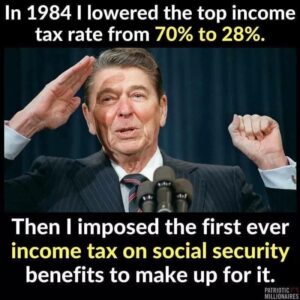 They’ve been running a

 Oh Yes Congress 2000 – 2019
 Ignorant Boomers are going to ruin America’s last chance to give the next generations the opportunity to generate life changing wealth all to make sure that they can protect the last century lying scum Bank Cartels! and the richest .01% that own 99% of the world’s wealth.
 PUT THEM IN JAIL
 The Federal Reserve System constructed on Jekyll Island had powers that King Midas could never have contemplated.