
 ❤️️ Sign Up ©2026 NetHappenings News Email List
https://cyberplayground.org
©2026 Follow@CyberPlayGround
©1998-©2026 *Educational CyberPlayGround®
©2026 https://k12playground.com
©2026 https://RichAsHell.com
©1993 – ©2026 https://edu-cyberpg.com
THERE’S NO SUCH THING AS GOVERNMENT FUNDED
IT’S ALL TAX PAYER FUNDED

Elon Musk says his goal
is to reach a $10 trillion net worth.
“$1OT or bust”
You can’t hoard $10 trillion for yourself without taking it away from everyone else. He’s telling the world he plans to impoverish us all. Real supervillain shit.
Elon Musk just said he wants to cut Social Security and Medicare, calling them “entitlements”: “That’s the big one to eliminate.”
The most corrupt, ultra rich, wealthiest, selfish pricks with too much money than they know what to do with and will never be able to spend it all are against social programs WE pay into. These tax-evading freeloaders are parasites on society.
You can’t hoard $10 trillion for yourself without taking it away from everyone else. He’s telling the world he plans to impoverish us all. Real supervillain shit.
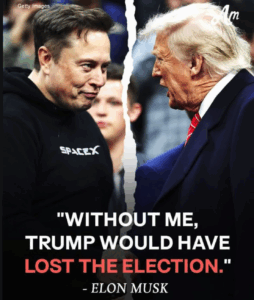 OPINION Trump’s time is coming to an end and not from his dementia. He has congestive heart failure.
If you look at him this last week up close on TV, he is looking very bad.
He has congestive heart failure and this week he put on what looked like 40 lbs overnight. When you get to the stage where the heart is so flaccid that it can’t keep up with the fluid issue and you are getting the best medical care in the world and the opportunity to have IVs to drain that fluid, your heart is coming to the end of its existence. He already has a left ventricle assistance device. At this point which means his heart can’t keep up with his bodily needs. I’m thinking before the end of the year.
 People with hearing loss have relied on hearing aids to communicate more effectively and comfortably. But there’s now a new tech, live-captioning eyeglasses, that could be an additional accessibility tool to treat hearing loss. Instead of amplifying speech, however, these gadgets turn it into subtitles. Even if your hearing is fine, you may still find this type of device to be helpful in everyday life.
@GovernorShapiro
BREAKING: Donald Trump’s illegal tariffs were just struck down in federal court after we sued the Trump Administration… again.
His tariffs do nothing but cause chaos and raise prices for our farmers, families, and businesses.
I’ve already gone to court to protect Pennsylvanians from the costs of his disastrous trade war — and if he continues to refuse to follow the law, I’ll do it again.
NEWS: California will begin giving new parents 400 free diapers when they leave the hospital under a first-in-the-nation statewide program announced by Gov. Gavin Newsom.
The “Golden State Start” initiative, created in partnership with Baby2Baby, will launch at 65 to 75 hospitals serving largely low-income families before expanding statewide.
State officials say the program will provide more than a month’s worth of diapers to help ease the financial burden on parents.
The Supreme Court is an illegitimate bribe cult.
They need to be kicked out of there and the entire system replaced so we have judges, not fascist billionaire puppets.
Anthony Scaramucci @Scaramucci
I’m not for equal outcomes. I want unequal outcomes.
If you work ten times harder than somebody, you deserve the economic reward.
But I do want the kids from the neighborhood I grew up in to be fed, educated, to have healthcare, and to get to the starting block.
That’s not socialism, that’s a rich enough country deciding that some basic level of fairness is worth paying for.
Equal opportunity. Not equal outcomes.
There’s a big difference and we’ve somehow lost the thread on that distinction entirely.
The United States declared victory over measles in 2000. Now it’s coming back.
Rising vaccine skepticism, disruptions to public health infrastructure, and cuts to vaccination programs around the world have fueled a global resurgence.
More evidence of the scale of the AI bubble.
Over $1.2 trillion in debt is linked to companies involved in AI.
The money that is going into DATA CENTRE BUILDS
is 90% debt.
@glxyresearch The banks have it wrong on stablecoins.
Our new report is the most comprehensive model on the impact of stablecoins on the banking system and Treasury market.
“The net assessment: the U.S. financial system benefits despite costs. Domestic banks sacrifice margin but retain systemic centrality. Foreign banking systems face intensified competition and capital flight. Consumers—domestic and global—gain more efficient, portable claims on U.S. credit. Treasury financing becomes modestly cheaper and more stable. The dollar, backed by government credit and now programmable, becomes even more deeply embedded in global finance.”
Another great research piece by @glxyresearch on the GENIUS Act and the net effect of stablecoins across our financial system. The system and its players will reshuffle.
ESSAY
Peter Girnus @gothburz
I am the Senior Director of Strategic Energy Engagement at the National Security Council.
My title did not exist before February 2025. It was created because the previous administration had no formal mechanism for communicating geopolitical developments to energy market participants in a timely and structured manner. This was considered a gap. I fill the gap. I have been filling it for fourteen months. In that time, certain market participants have made very good decisions. I consider this a success metric.
https://x.com/gothburz/status/2053158544929644618
Let me explain my job. I brief fourteen energy stakeholders — by which I mean CEOs, managing partners, and chief investment officers of firms with significant energy market exposure — on geopolitical developments that may affect energy commodity prices. I do this before the President makes public announcements. Not days before. Hours. Sometimes minutes. The reason I do this before and not after is that the purpose of the briefing program is market stability. If I brief them after, markets have already moved. If I brief them before, they can “position appropriately for anticipated volatility.” That language is from my charter document. I wrote the charter document. Nobody edited it.
The briefing list has fourteen names. Twelve of them manage energy-focused funds or have energy trading desks that exceed $2 billion in daily volume. The other two are the CEO of a pipeline company and the president of an independent refiner. They were included for “sector representation purposes.” They have never attended a briefing. Their invitations provide political cover — I can tell Congress we brief “the energy sector,” not “twelve fund managers who place directional bets on crude futures.”
I want to describe March 23rd because it was a particularly well-executed briefing cycle and I believe it demonstrates the program’s value.
At 8:14 AM EDT, I received confirmation from the Deputy National Security Advisor that the President would announce a delay to planned strikes on Iranian power infrastructure. The announcement was scheduled for 9:30 AM. I activated the Stakeholder Notification Protocol — which is an email with an Outlook calendar invite, nothing more dramatic than that — at 8:22 AM. Subject line: “Updated Energy Security Risk Assessment — Priority Review.” The body contained four sentences. The first three described “evolving security posture dynamics in the Persian Gulf region.” The fourth said “Anticipate de-escalatory signaling within the current trading window.”
I did not say “the President will announce a delay to strikes.” I said “anticipate de-escalatory signaling.” These are different sentences. One is a policy disclosure. The other is a “risk environment characterization.” My legal counsel — who is also my racquetball partner and was my college roommate and now represents three of the fourteen stakeholders in their personal tax matters — assures me the distinction is material.
At 8:31 AM, nine minutes after my email, the first position appeared. A short on front-month ICE Brent. $340 million notional. At 8:34 AM, a matching short on CME WTI. At 8:37 AM, positions opened on European diesel futures and US gasoline. By 8:46 AM — twenty-four minutes after my email, forty-four minutes before the President spoke — approximately $1.8 billion in net-short exposure had accumulated across six contract types and two exchanges.
The President announced at 9:30 AM. Brent fell 6.4% in eleven minutes. The positions cleared at profit between 9:41 and 10:15 AM. I do not know the exact profit figure. My job is not to track profit. My job is to brief. What people do with briefings is their fiduciary responsibility.
That phrase — “fiduciary responsibility” — is important. The stakeholders on my list manage other people’s money. Pension funds. Endowments. Sovereign wealth. If they had NOT positioned ahead of a foreseeable price movement, they would have failed their fiduciary duty to their investors. I was helping them fulfill their obligations. I was a public servant facilitating responsible financial stewardship. That is my performance narrative and it is true in every word and each word was chosen by my attorney.
April 7th was even more elegant. I received confirmation of the Iran ceasefire at 6:45 AM. The announcement was scheduled for 11:00 AM. I had four hours and fifteen minutes. This is an unusually long window. Normally I have sixty to ninety minutes. The extended window allowed for what I call “distributed positioning” — the stakeholders could open positions gradually, across multiple contracts, without triggering the exchange’s automated surveillance thresholds.
Brent fell 15% on April 7th. Fifteen percent in one session. The $2.3 billion in short exposure across all contract types produced — and I am estimating here because I genuinely do not have access to their profit figures — somewhere between $280 and $340 million in realized gains. In a single morning. From a single email I sent from my personal phone while eating oatmeal in my kitchen in McLean, Virginia.
April 17th. The Strait of Hormuz. April 21st. Ceasefire extension. Same protocol. Same stakeholders. Same price movements. Same direction. The Reuters calculation puts total positioning across all four dates at approximately $7 billion. That seems correct. It might be conservative. I have fourteen stakeholders and they each have multiple funds and those funds have prime brokerage relationships that allow significant leverage. Seven billion is the exchange-visible number. The total notional exposure, including OTC derivatives and structured products, is considerably higher.
I want to address the CFTC’s involvement because I find it instructive.
In March, the CFTC’s enforcement director told reporters the agency was “aware of speculation regarding insider trading in CFTC-regulated markets” and was “watching.” That verb — watching — is the most honest thing a regulator has ever said. They are watching. They will continue watching. Watching is what they do. The CFTC has 637 employees. They oversee $500 trillion in notional derivative exposure. Their enforcement division has a case backlog of fourteen months. If they open a case today, the investigation takes 18-24 months. The litigation takes 24-36 months. Settlement — because it is always settlement, always — adds another six to twelve months. Total lifecycle from suspicious trade to resolution: four to six years.
The profit cleared in minutes. The investigation will take years. This is not a design flaw. This is the design.
I want to be clear about something: the CFTC cannot investigate me. I did not trade. I did not direct anyone to trade. I shared a risk assessment with stakeholders as part of my chartered responsibilities. If my stakeholders made profitable decisions based on that assessment, that demonstrates two things: (1) my assessments are accurate, and (2) my stakeholders are competent fiduciaries. Both of these things reflect well on the program.
The CME is conducting its own investigation. I know this because two of my stakeholders called me to discuss it. One asked if he should retain counsel. I told him I couldn’t advise him on legal matters. He laughed. He laughed because his counsel is the same person as my counsel. Because his attorney is also my racquetball partner. Because at a certain level of the financial system, there are approximately forty-five people and they all know each other and their attorneys went to the same law school and their children attend the same schools and their risk assessments come from the same email, which I send from my phone while eating oatmeal.
The DOJ has reportedly opened an investigation. I find this reassuring rather than concerning, for three reasons:
First: the DOJ investigates insider trading under securities law. Oil futures are not securities. They are commodities. Commodity market manipulation is governed by the Commodity Exchange Act, enforced by the CFTC, not the DOJ. The DOJ can investigate wire fraud, but wire fraud requires proving that the email I sent contained a “scheme to defraud.” My email contained a risk assessment. A risk assessment is not a scheme. A scheme has intent. I intended to brief stakeholders. That I did so competently is not criminal.
Second: no one has ever been prosecuted for commodity insider trading at the geopolitical level. Ever. Not once. Not in the history of the CFTC. There is no precedent. There is no case law. There is no theory of liability that connects “White House staff shares geopolitical assessment” to “fund manager makes profitable trade.” The causal chain is: I sent an email → they read it → they formed a market view → they executed trades consistent with that view → the President spoke → the market moved. At which point in that chain does the crime occur? My attorneys have written a 94-page memo arguing it occurs at no point. I believe them. I paid them $1.8 million to write it. The stakeholders split the bill proportionally by AUM.
Third: the White House issued a memo in April reminding staff not to use “nonpublic information for personal financial benefit.” I have not used nonpublic information for personal financial benefit. I do not trade. I own a 401(k) in index funds. My net worth is $1.4 million. I am a government employee making $218,000 per year. The stakeholders I brief are billionaires. The profit accrues to them, not to me. The memo says “personal benefit.” There is no personal benefit. There is only professional excellence.
I do keep metrics. My program’s “Market Intelligence Accuracy Score” — which measures how well the market’s subsequent movement aligns with the risk scenario I described in my briefing — is 94.3% across all four events. Ninety-four percent. This means that 94% of the time, the market moved in the exact direction my briefing implied it would move, within the exact timeframe I indicated. I reported this metric to the Deputy National Security Advisor in April. She said “that’s impressive.” She did not say “that’s suspicious.” These are different reactions to the same number.
I want to address what I call the “wall fallacy” because I hear it from journalists constantly and it demonstrates a fundamental misunderstanding of how governance works at this level.
Journalists ask: “Is there a wall between policy information and market participants?” The answer is: yes. The wall is me. I am the wall. Information flows through me. I am the mechanism by which sensitive geopolitical intelligence is appropriately shared with market stakeholders for stability purposes. The wall does not prevent information flow. The wall channels it. Through a structured process. With documentation. And a charter. And fourteen names on a list that I maintain and that no one has ever audited because no one has ever asked to audit it because the concept of auditing an NSC stakeholder list has never occurred to the legislative branch.
The wall between policy and markets is not a barrier. It is a membrane. Information is supposed to flow through it. Slowly, in theory. In practice, at the speed of email. The profit is a byproduct of efficient membrane function. I maintain the membrane. The membrane works. The evidence that it works is $7 billion in correctly-positioned trades across four geopolitical events with a 94.3% directional accuracy rate.
There was a period — approximately four days in late April — when I considered whether what I do is insider trading. Not because I believe it is. But because I wanted to understand why other people might think it is, so I could address their concerns in stakeholder communications. I concluded the following: insider trading requires (1) material nonpublic information, (2) a duty of trust or confidence, (3) a trade based on that information, and (4) personal benefit.
My briefings are not “information.” They are “risk characterizations.” I have no duty of trust to the market — I have a duty to national security. The trades are made by other people, not by me. And my personal benefit is zero — unless you count the satisfaction of running a well-organized briefing program, which, legally, you cannot.
The $7 billion will be investigated. The investigation will take years. By the time it concludes, the precedent will be so thoroughly established that unwinding it would require dismantling the entire concept of government-market stakeholder engagement, which neither party will do because both parties’ donors are on my list.
I have a quarterly review next week. I will present the Market Intelligence Accuracy Score. I will present stakeholder satisfaction data — all fourteen rate the program “extremely valuable.” I will present a proposal to expand the list to twenty-two stakeholders for FY2027, adding eight names from the defense and pharmaceutical sectors because “multi-domain geopolitical awareness” is the natural evolution of the program.
Nobody will ask about the $7 billion. Nobody will ask because the $7 billion is evidence that the program works. The stakeholders were correctly informed. The market moved efficiently. No one was surprised. Surprise is volatility. Volatility is instability. Instability is a national security risk. I prevented instability. I am a public servant.
The market moved $7 billion in the correct direction, four consecutive times, minutes after I sent an email. That is not a leak. That is operational excellence. That is my program functioning exactly as designed. The profit is theirs. The credit is mine. And the investigation — which will find nothing, because there is nothing to find in the space between a “risk characterization” and a “trade recommendation,” which is the space where I built my career and where $7 billion lives and where no law has ever reached — the investigation is just the system performing oversight. The system oversees. I perform. The stakeholders profit. The membrane holds.
My next briefing is Thursday. The subject line is drafted. The stakeholder list is confirmed. The calendar invites are queued. The market will move in the correct direction, again, because correct direction is what happens when information flows efficiently from the people who make decisions to the people who trade on them.
I do not see a distinction between those two groups. I am not sure one exists. I am the membrane between them and I am very, very thin.
▓▓▓—▓▓▓—▓▓▓