
► ► Educational CyberPlayGround®, Inc. 1999
► ► Blog CyberPlayGround.org
► Get NetHappenings Newsletter ©1989 in your email subscribe & unsubscribe
► ► K12 School Directory
► ► Follow @Cyberplayground @NetHappenings @K12Playground
Black History Month All Year Long
 Standing in the Shadows of Motown – Nominated for BEST Documentary 2002 see it on Netfix, Prime, etc.
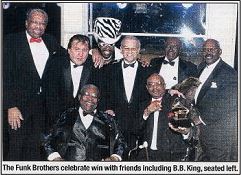
Who Are The Funk Brothers?  2x Grammy winning sound track!! Educational CyberPlayGround, Inc. helped to produce this movie.
#UnionSongs @cyberplayground #music
#Labor Heritage Foundation, promoting artistic expression and labor history.”#Songs of #Work and #Protest” with #Edith #Fowke , one of the most significant #labor #history #songbooks ever written.
https://edu-cyberpg.com/Music/WarSongs.html
RETHUGLICANS
Who’s shocked that not a single House Republican plans to support President Biden’s COVID package? This is par for the course with the GOP. They did the same thing to Clinton in 1993, to Obama in 2009, and now it’s Biden’s turn. Rethuglicans have no interest in governing.

THE RISE OF PRIVACY TECH
Facebook will drop ban on news pages in Australia
https://appleinsider.com/articles/21/02/23/facebook-will-drop-ban-on-news-pages-in-australia
Claiming the Australian government has agreed to amendments in its proposed media law changes, Facebook has announced that it will restore news pages in the region.
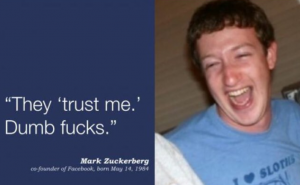 “Mark Changed The Rules”: How Facebook Went Easy On Alex Jones And Other Right-Wing Figures
https://www.buzzfeednews.com/article/ryanmac/mark-zuckerberg-joel-kaplan-facebook-alex-jones
“Clubhouse reminds one of Facebook in its early days: starting out as an exclusive network and then gathering the masses into its giant data-hoovering machine before morphing into a threat to democracy. We’ve seen this movie before.” Some serious privacy fails, including dark patterns, plus opaque business model. https://www.theguardian.com/commentisfree/2021/feb/20/why-hot-new-social-app-clubhouse-spells-nothing-but-trouble
@joinclubhouse collects people’s personal information even before they engage with the app. This design is problematic because a user cannot consent on behalf of others. Moreover, this begs the question of whether Clubhouse is creating shadow profiles of non-users.
When FOMO Trumps Privacy: The Clubhouse Edition
https://medium.com/privacy-technology/when-fomo-trumps-privacy-the-clubhouse-edition-82526c6cd702
Samsung now updates Android for longer than Google does
https://arstechnica.com/gadgets/2021/02/samsung-now-updates-android-for-longer-than-google-does/
M1 Mac Users Report Excessive SSD Wear
https://www.macrumors.com/2021/02/23/m1-mac-users-report-excessive-ssd-wear/
Microsoft president: The only reason we know about SolarWinds hack is because FireEye told us!
• The massive hack into government systems through a software contractor would have remained unknown by the public if not for one company’s decision to be transparent about a breach of its systems, Microsoft President Brad Smith told lawmakers at a hearing Tuesday.
• Smith’s testimony highlights how cybersecurity incidents can potentially go undisclosed.
• He planned to tell lawmakers that private sector companies should be required to be transparent about significant breaches of their systems.
< – >
https://www.cnbc.com/2021/02/23/microsoft-exec-brad-smith-praises-fireeye-in-solarwinds-hack-testimony.html
Fry’s Electronics going out of business, shutting down all stores
https://arstechnica.com/information-technology/2021/02/frys-electronics-is-no-more-and-all-30-stores-will-soon-close/
Flaws in zoom @KeybaseIO
App Kept Chat Images from Being Deleted https://securityledger.com/2021/02/exclusive-flaws-in-zooms-keybase-app-kept-chat-images-from-being-deleted/
NOTHING ABOUT PROTECTING K12 CHILDREN’S PRIVACY
“penis politics”
US Education Department promotes putting student records on blockchain
A new government-funded challenge seeks blockchain-based solutions to simplify educational data sharing, but implementation could take time.
The COVID-19 pandemic has exposed flaws across various sectors. As a result, a number of government departments are evaluating blockchain-based systems as possible solutions for challenges involving multiparty workflows, record-keeping, transparency and more.
For example, the United States Department of Education recently provided funding for the launch of the “Education Blockchain Initiative.” Referred to as the EBI, this project is led by the American Council on Education — an organization that helps the higher education community shape effective public policy — and is designed to identify ways that blockchain can improve data flow between academic institutions and potential employers.
PRIVACY IS A RIGHT
Determined to seek out new technology solutions, ACE announced the “Blockchain Innovation Challenge” at the end of 2020 to find projects capable of reinventing the U.S. education and employment ecosystem. The challenge specifically focused on helping underserved populations that have been hit the hardest by the pandemic.
Louis Soares, chief learning and innovation officer of ACE, told Cointelegraph that as a whole, the higher education sector has been impacted financially by the economic downturn. This has resulted in a decline in student enrollments, placing even more pressure on educational budgets that now require a digital approach:
“Higher education is learning to operate in a new technology-enabled environment. We must explore different ways of creating connections between education and work. This includes finding new approaches to credentialing (and hiring) that leverage the potential of emerging technologies to improve communication among education and training organizations.”
Blockchain gives students control over their credentials
What about the rules of privacy
According to Soares, blockchain technology can help empower students by providing them with control over their educational records like degrees and transcripts. This is especially important for allowing seamless transitions to occur when a student transfers schools, or for those who are seeking employment and need to show credentials.
A document from the Education Department states that educational records are generally located at the school a student attends or has attended. It further notes that if a student has transferred schools, those records “may” transfer with the student, but some “may” remain at the school. As such, there are a number of challenges present for students who must obtain their personal records.
#edtech #privacy EDIS @getedis is a K12 data system edis.io/
Google Tracks K12 Student Data #Privacy
The Blockchain Innovation Challenge devoted $900,000 to help solve this problem and announced four Phase 1 winners on Feb. 11. According to Soares, the winning teams — from Arizona, Nebraska, Texas and Utah — showed potential for using blockchain and distributed ledger technology to streamline the sharing of educational records.
For example, one of the winning teams was the UnBlockEd project, which leverages a blockchain-based system to address inequitable transfer credit recognition issues. The project is led by the University of Arizona and the Georgia Institute of Technology, along with various technology providers and academic institutions.
Greg Heileman, vice provost for undergraduate education at the University of Arizona, told Cointelegraph that UnBlockEd empowers students by giving them self-sovereignty over their learning records. Heileman noted that this is achieved through a decentralized identity management system that allows students to control who has access to their learning records, or transcripts:
“We are working to build out a minimally viable product (MVP) that will clearly demonstrate the feasibility of our approach. This MVP will demonstrate how a student in a degree program at any college/university in the State of Kentucky can efficiently transfer to any other program at any other college/university in the state.”
Specifically, Heileman explained that a “degree roadmap” will be constructed to show students how to transfer their prior credits to those in the receiving program. To ensure this, UnBlockEd leverages Fluree, a decentralized data platform that stores secure, verified, reusable data.
Brian Platz, co-CEO of Fluree, told Cointelegraph that Fluree allows for data to be held privately by individuals, yet it also lets other parties view that information. As such, different groups can issue credentials, while those receiving the information can verify the data is accurate:
“This solves the data reusability problem. We use a private blockchain to tokenize data and validate a series of rules that guarantees information adheres to those rules. This is like a smart contract, but heavily data oriented.”
Blockchain solves data transfer inefficiencies
The solution being built by UnBlockEd is extremely important for a number of reasons. For instance, according to a study by the Government Accountability Office, students will on average lose the equivalent of one semester of course work with each transfer.
Heileman further shared that out of 23 million students in higher education, about 35% of them will transfer at least once, and 11% will do it twice during their academic career. He also pointed out that community colleges are disproportionately functioning as a primary entry point for students from historically underrepresented ethnic groups and low-income families. “To put it mildly, transfer articulation is a structural inequity in higher education. Our hope is that the UnBlockEd project will reduce the extent of this inequity,” Heileman commented.
Another winning project came from Texas Woman’s University. This initiative aims to establish a consortium of institutions throughout the North Texas region via a shared credentialing platform. The platform would allow students to store and send their educational records to colleges and employers across North Texas.
Fluree also helped power the Lifelong Learner Project, which aims to develop a digital wallet for teachers to store and access their credentials, certifications and learning resources. This aims to enable teachers to share these verifiable credentials with entities such as state licensing systems, human resources departments and learning management systems.
Implementing is the next step
While each of these projects takes an innovative approach to solving challenges related to educational data sharing, implementing these initiatives will likely take some time.
For instance, Platz explained that there is a supply-and-demand side when it comes to blockchain-based projects. He pointed out that while universities and educational groups can issue students digital credentials, employers are not yet requesting them: “We are still building ecosystems around this involving education and government standards.”
Fortunately, Platz noted that the new administration of President Joe Biden shows potential for implementing new technology standards focused on blockchain and other emerging technologies that can provide benefits. It’s also encouraging to see that other countries have started to store educational certificates and records on blockchain networks.
Matla, for example, was one of the first countries to announce that all educational certificates will be kept on a blockchain. Furthermore, the Massachusetts Institute of Technology, or MIT, created a pilot program in 2017 to issue blockchain-based digital certificates to graduates. While this may be, an MIT Media Lab blog post explaining lessons learned from the project noted that an important takeaway has been that blockchain is a complicated technology and that there are still very few people who understand it.
Epstein, Ito, MIT, AI Media Lab, Techno Bros, Complete Ethical Failures
The Post Office
 Louis DeJoy is still postmaster because he can only be fired by the USPS Board of Governors. The current Board consists of two Democrats and four Republicans. But there are three vacancies. To save the postal service, Biden must fill those vacancies and send DeJoy packing.
#Black History Month All Year Long, #Republicans won’t work with Democrats, The Rise Of #Privacy Tech, #Facebook, #Clubhouse, #HigherEd #BlockChain