
 ❤️️ Sign Up ©2026 NetHappenings News Email List
https://cyberplayground.org
©2026 Follow@CyberPlayGround
©1998-©2026 *Educational CyberPlayGround®
©2026 https://k12playground.com
©2026 https://RichAsHell.com
©1993 – ©2026 https://edu-cyberpg.com
NoelCaslerComedy @caslernoel
https://noelcasler.substack.com/p/inside-job?
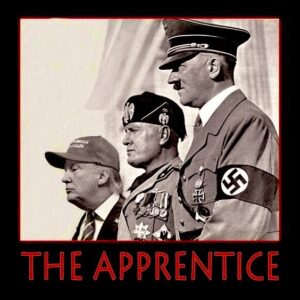
“By the time he had become a reality show star, Trump had blown through his $400 million inheritance and bankrupted most of his businesses; he needed the NBC pay check and so did his kids. That’s why they all ended up on the show.
WATCH Jeffrey Epstein invoke his 5th, 6th & 14th Amendment rights when asked if him Donald Trump socialized with children ~ 60 Minutes interview
Katie Johnson sued Donald Trump for rарing her when she was 13-year-old at Jeffrey Epstein’s house in New York City, but was forced to drop the case after receiving multiple death threats. Her sworn court testimony was public record. Trump didn’t sue her for defamation. He sues EVERYONE. Why hasn’t he sued her?
Virginia Giuffre, page 103 of deposition:
“Ghislaine taught me how to give sexual massages when I was 16.” Maxwell’s lawyers called her a liar.
A jury believed her.
YOU HAVE TO PLAY BY THE RULES OF OUR CAPITAL MARKETS NO INSIDER TRADING
It’s clear there are 2 sets of rules. Insider trading is ok if you are a Politician. But if you have a friend with inside information and you trade on that information you will be held accountable.
TWO TIER SYSTEM
ESSAY
@worldlibertyfi the best SCAMMERS of the world
Wealthy Anon @wealthyanon
https://x.com/wealthyanon/status/2048528499690881382
I have been digging into $WLFI for weeks. Not the surface level “lol Trump coin” takes, but the actual filings, on-chain flows, smart contract behavior, founder histories, lawsuits, and foreign money. What I found is uglier than expected and the story is not being told loudly enough. This is a receipts piece. Every claim below is sourced from CoinDesk, Reuters, Bloomberg, NYT, NBC, DL News, The Block, court filings, and on-chain data.
The marketing pitch is that WLFI is a decentralized finance project, a governance token, give power back to the people, make finance great again, with the Trumps as just brand ambassadors and the community voting on everything. The reality, in their own filings, is that a Trump family entity called DT Marks DEFI LLC holds 60 percent of the parent holding company that controls the protocol. That entity is contractually entitled to 75 percent of net revenue from token sales after operating expenses. The Trump family and affiliated companies hold 22.5 billion of the 100 billion WLFI supply. President Trump personally disclosed over 57 million dollars in income from World Liberty on his 2025 financial disclosure. And the smart contract has an admin controlled blacklist function that can freeze, restrict, or effectively confiscate any holder’s tokens, a fact that was not disclosed to early investors and only came out publicly when the team used it on their biggest backer. That is not decentralized finance. That is a centralized brokerage with a governance theater attached, where the controlling entity happens to be the family of a sitting US President.
It is worth remembering how this thing started. The initial token offering in October 2024 was a flop. By the end of October the project had only sold 2.7 million dollars worth of tokens. Trump was a longtime crypto skeptic who had publicly attacked it during his first term, then suddenly pivoted, and the market initially shrugged. What changed everything was his November 2024 election win. The minute it became clear he was returning to the White House, wallets opened, foreign money started flowing, and the project went from struggling to over half a billion raised within months. That timing alone tells you this is not really a financial product. It is a political access vehicle that happens to be denominated in tokens.
Now look at who actually built the thing. The two operational founders, Chase Herro and Zachary Folkman, are not polished fintech veterans. Chase Herro has openly described himself as the “dirtbag of the internet.” He has been on Logan Paul’s podcast talking about his prior prison time on drug related charges, where he literally made jail sound fun. Bloomberg’s profile of him led with “weed, weight loss colon cleanses, and a 149 dollar a month get rich quick class.” Before crypto, Herro made his money in internet advertising and self-described as a former marijuana dealer. He founded Pacer Capital, now defunct, then Dough Finance, which we will get to. Zachary Folkman previously registered a company called Date Hotter Girls LLC and ran YouTube seminars teaching men how to pick up women. He and Herro also ran mastermind networking groups, sold online e-commerce courses, and operated a “no censorship” subscription platform called Subify, whose Puerto Rico LLC registration was actually canceled at the end of 2023, with the listed contact phone number now reportedly belonging to a plumber. Now here is the kicker. Their previous DeFi project Dough Finance was hacked for around 2 million dollars in July 2024 and effectively shut down. When CoinDesk reviewed the earliest version of WLFI’s GitHub repository, which was later deleted, it found code that appeared to have been lifted directly from Dough Finance, including near identical user interfaces. Several listed WLFI developers including Octavian Lojnita and the pseudonymous 0xboga also worked on Dough Finance. So the same operators whose previous DeFi project got drained are now running the financial infrastructure holding hundreds of millions of dollars from token buyers. There is also a pending civil fraud case against Herro in Miami federal court tied to the Dough Capital collapse, with a trial set for next April.
Now look at the money flow. The Trump family entity is entitled to 75 percent of net revenues from WLFI token sales after operating expenses, and 60 percent of revenue from protocol operations once the lending features are live. Of the roughly 550 million dollars raised through token sales, an estimated 400 million flowed to the Trump family. Herro and Folkman, via their Puerto Rico based Axiom Management Group, take a net 12.5 percent cut of revenue and personally collected at least 65 million dollars. The advisory firm MetaleX Pro was disclosed as receiving 1.3 percent of the entire WLFI supply. DWF Labs, a market maker with its own controversial reputation, bought 25 million dollars worth. After all of these allocations, Reuters reported that roughly 5 percent of funds remained for actual platform development. Read that again. Five percent of what was raised actually goes toward building the thing. The rest is distributed to insiders and friendlies. This is not how legitimate financial projects are funded. This is how a personal enrichment vehicle is structured. And of approximately 85,000 wallets that have participated in WLFI sales, around 70 percent of the 550 million raised came from wallets spending at least 100,000 dollars each, with over 50 percent from wallets buying 1 million dollars or more in a single tranche. This is not a community project. It is a whale and institutional vehicle wearing community drag. And remember, 80 percent of early investor tokens are still locked. So the half billion in the door came from people who do not actually have access to most of what they bought.
In April 2026 Justin Sun, once WLFI’s largest single backer with roughly 75 million dollars invested, went public with an allegation backed by on-chain evidence. The WLFI smart contract contains a hidden admin controlled blacklist function that allows the team to freeze, restrict, or burn any holder’s tokens unilaterally. WLFI did not really deny this. They confirmed it and defended it as a compliance tool comparable to USDT or USDC. That defense is the smoking gun. USDT and USDC are centralized stablecoins explicitly run by central issuers. WLFI is marketed as a decentralized governance token. You cannot have it both ways. Either you can freeze users at will, in which case you are a centralized custodian and your governance is theater, or you are decentralized and you cannot. Sun discovered this the hard way. WLFI froze approximately 540 million of his unlocked tokens, around 2.9 billion total locked allegedly worth 900 million at peak, stripped his governance voting rights, threatened to permanently burn his holdings, and per his complaint did all of this without disclosing to investors that the function existed in the first place. Sun’s lawsuit alleges the operators “see the project as a golden opportunity to leverage the Trump brand to profit through fraud.” If they will do it to a billionaire who put 75 million in the door, what do you think they will do to retail.
Then there is the Dolomite situation, which is the most damning piece if you understand crypto mechanics. WLFI’s treasury deposited approximately 5 billion of its own WLFI tokens as collateral on a lending protocol called Dolomite. They borrowed roughly 75 million dollars in stablecoins against that collateral, about 65 million of their own USD1 stablecoin and 10 million in USDC. More than 40 million of the proceeds was then routed to a Coinbase Prime account. Three things make this catastrophically sketchy. One, Dolomite’s co-founder Corey Caplan also serves as WLFI’s Chief Technology Officer. So WLFI deposited its own tokens, on a protocol run by its own CTO, and pulled out real dollar value. Two, WLFI’s collateral made up roughly 55 percent of Dolomite’s total value locked, creating a single point of failure for every other depositor on the platform, many of them ordinary users who lent real money expecting yield. The borrowing also pushed the USD1 pool’s utilization to around 93 percent, making it nearly impossible for those depositors to withdraw. Three, this is structurally identical to what FTX and Alameda Research did with the FTT token before they imploded in 2022. The only difference is that FTX’s moves were secret, while WLFI’s are happening in public, on-chain, in plain view. When you are using your own freshly minted governance token as collateral to extract real liquidity right before a major token unlock event, you have crossed every line that DeFi was supposedly invented to prevent.
Before the April 2026 unlock proposal there was an earlier governance maneuver in February 2026 that should have been the warning shot. WLFI proposed, and got approved, a 180 day staking lock to participate in any governance vote. Holders had to surrender the only thing they could do with their tokens (sell them) for half a year in exchange for a base reward of around 2 percent annual yield, which is nothing in DeFi. The proposal was approved with 99.12 percent of votes in favor, which sounds like a community mandate, except for the small detail that more than 76 percent of the voting power came from just ten users. The proposal also created a tiered system of “Nodes” requiring 10 million WLFI staked (roughly 1 million dollars) and “Super Nodes” requiring 50 million WLFI (roughly 5 million dollars), with Super Nodes getting “guaranteed direct access to the WLFI team for partnership discussions” and other privileges normal holders cannot access. Read that out loud. They explicitly built into the governance structure a paid access tier for whales while marketing the project as community-driven. Critics noted that staking historically equals selling pressure once the lock ends, and that 2 percent yield in exchange for six month illiquidity in a token that had bled 76 percent from its highs is a brutal trade. Many compared it to a “lock holders out before they can leave” mechanism, which is exactly what played out two months later.
When the April 2026 proposal hit, it was one of the most cynically designed governance documents I have read. It unlocks 62.3 billion previously locked WLFI over the next several years. For early public buyers, the 17 billion they own, there is a two year cliff followed by a two year linear vest, meaning the unlock starts in 2028 and is not complete until 2030. For founders, team, and insiders holding 45.2 billion, the same two year cliff then a three year vest, with 10 percent (around 4.5 billion tokens) burned up front as a “commitment signal.” The kicker is that holders who do not affirmatively accept this new schedule have their tokens locked indefinitely. So you have a choice. Accept terms that lock you out until well past the end of the Trump presidency, when the political tailwind propping up this thing’s narrative is gone, or stay frozen forever. There is no third option. Sun called it “one of the most absurd governance scams” he has ever seen. Token holders on X are organizing for class action. The proposal also requires only a 1 billion WLFI quorum and simple majority. The insiders alone hold enough to pass it without a single retail vote. That is the governance.
Now turn to USD1, the stablecoin. WLFI markets it heavily as the most transparent stablecoin in the industry. They announced “real-time proof of reserves” in late February 2026, a Chainlink and BitGo integration that allegedly verifies backing every second. Sounds great. Here is the catch. According to NYDIG and confirmed in stablecoin industry reporting, USD1 had not published a monthly reserve attestation report since July 2025. Their official product page promised monthly reports. They went seven months without delivering one, while announcing a flashier “real time” system that has not replaced standard institutional attestations. That is the textbook playbook of distract with a shiny new feature while the basic disclosure obligation gets quietly dropped. Real time on-chain feeds are useful, but they are not a substitute for a third party CPA firm signing off that the dollars are actually in the account. The disclosed auditor was Crowe LLP. The gap in their reporting is a live compliance issue that institutional and retail holders should be asking about loudly.
The USD1 story gets worse the more you pull on it. In April and May of 2025, MGX, an Abu Dhabi state linked investment firm chaired by Sheikh Tahnoun bin Zayed Al Nahyan (a member of the UAE royal family who also serves as the country’s national security advisor), announced it would use USD1 to settle a 2 billion dollar investment into Binance. The Abu Dhabi sovereign wealth firm could have settled this in any currency on earth. They picked the new Trump family stablecoin. WLFI is estimated to earn between 60 and 80 million dollars annually in yield from the reserves backing that 2 billion, provided Binance does not redeem. So an Abu Dhabi sovereign fund effectively chose to pay the Trump family roughly 70 million dollars a year for as long as that money sits parked, while the Trump administration was simultaneously reviewing UAE access to advanced Nvidia AI chips, a national security review that was reversed in the UAE’s favor. Senator Chris Murphy and others have called this corruption in plain English. Eric Trump signed a separate UAE-linked deal that included 187 million dollars paid upfront to Trump family entities. Beyond MGX, Binance announced it would convert all collateral assets backing Binance-Peg BUSD into USD1 at a 1:1 ratio, deeply embedding the Trump family stablecoin into the largest exchange in the world’s collateral structure. Binance now has a direct financial interest in keeping USD1 pegged. Justin Sun, a Chinese born crypto entrepreneur, was being prosecuted by the SEC for fraud, market manipulation, and unregistered securities at the time he became WLFI’s largest backer with 75 million dollars. After he invested, his SEC case was paused, then settled for a 10 million dollar fine in March 2026. House Democrats on the Financial Services Committee have publicly alleged pay to play, and at least one investigation was reportedly closed after a multi-million dollar payment to the firm. USD1 was integrated into Tron, Sun’s blockchain, a deal announced by Steve Witkoff, whose son Zach Witkoff is the CEO of WLFI and who himself serves as Trump’s Middle East envoy. Trump also pardoned an investor in a company that World Liberty had invested in. The New York Times wrote in its investigation that “the line between private business and government policy is being eroded in a way without precedent in modern American history.” That is not me saying it. That is the paper of record.
Sun’s lawsuit, filed in the Northern District of California in April 2026, is worth reading in its own right, not because Sun is a sympathetic figure (he absolutely is not given his own SEC history) but because the allegations are specific and on-chain verifiable. Sun alleges WLFI’s operators see the project as a golden opportunity to leverage the Trump brand to profit through fraud, that the blacklist function was secretly embedded in the contract and never disclosed, that WLFI faces collapse and potential insolvency, that the team pressured him for additional capital then froze his existing tokens when he resisted, and that he was blamed for a 40 percent token price crash he had no role in causing. He is seeking unfreezing of his holdings, damages, and an injunction barring WLFI from burning his tokens. WLFI’s response was essentially “see you in court” plus a misconduct accusation against Sun. Whatever the merits on Sun’s side, none of it changes the structural facts. The freeze function exists. It was used. It was not disclosed up front. A centrally frozen token is by definition not a decentralized one. The lawsuit, even if Sun loses on every count, has already extracted that admission on the public record.
Price action is downstream of fundamentals. WLFI is down roughly 76 percent from all time high, around 44 percent year to date. The team has reportedly conducted around 65.6 million dollars in open market buybacks over six months, and the token still trades roughly 48 percent below their average buyback price. That is the market telling you that even with the treasury propping the price up with real cash, sellers are stronger than buyers. The final unlock schedule, if accepted, dumps tens of billions of additional tokens into the market over 2028 to 2030. The smart money is leaving. The patient money is being asked to commit for four more years on coercive terms. The retail money is the exit liquidity.
It is worth zooming out. Days before his second inauguration in January 2025, Trump launched a memecoin called TRUMP. Around the same time, Melania Trump launched MELANIA. Both peaked within hours, attracted enormous retail buying, and have since lost the vast majority of their value. TRUMP today trades around 2.81 dollars, down from highs near 45. Both had token allocations heavily skewed toward insider wallets. Both are essentially worthless to the late buyers. WLFI is the third iteration of this same playbook, only more ambitious and with a real institutional surface (a stablecoin, lending products, foreign government partnerships) wrapped around the same fundamental structure. Insiders capture the upside, retail buys the narrative, lockups protect the price during the politically useful window, and the eventual collapse happens after everyone with information has banked their cut. One token holder who runs http://AirdropAlert.com and was invited to a Mar-a-Lago dinner for top Trump memecoin holders attended by the president himself in May 2025, said about WLFI that “investors went in blind.” He is not wrong. But what is becoming clearer is they did not go in blind because of bad luck. They went in blind because the structure was specifically designed to keep them blind, with vesting schedules announced after capital was raised, governance functions added without disclosure, and contractual freeze mechanisms hidden in code forked from a previously hacked project.
So is it a scam. I am going to be careful with that word because it is a legal accusation and these people have aggressive lawyers and a presidency. But here is a question worth sitting with. If you described a project to someone with no political horse in the race, no Trump support, no Trump opposition, and you said it is run by a guy who calls himself the dirtbag of the internet and a former pickup artist seminar host, their previous project got hacked and copy pasted into this one, the founding family takes 75 percent of token sale revenue and 60 percent of operational revenue, only around 5 percent of raised capital goes to actual platform development, the supposedly decentralized token has a hidden centralized kill switch that was only revealed when used on the largest investor, they use their own token as collateral to borrow real money on a protocol run by their own CTO, 80 percent of early buyer tokens are still locked, the unlock proposal vests past the end of the politically connected period, the stablecoin product has not published its promised monthly attestations in over half a year, an Abu Dhabi state firm picked their stablecoin to settle a 2 billion dollar deal that earns them 70 million per year in pure yield, the largest investor is suing for fraud after his tokens were frozen, multiple congressional investigations are underway, and the New York Times says there is no precedent in modern American history for the conflicts of interest involved. What would you call it. I will let you fill that in.
Even if you do not hold a single WLFI token this is worth paying attention to, because what is being normalized here is a template. A sitting president’s family operating a financial product that takes in foreign sovereign money, contains undisclosed kill switches over user funds, and uses public policy goodwill as a marketing engine. If it works, it gets copied. The TRUMP and MELANIA memecoins have already lost most of their value, and there is now a documented playbook. Politically branded tokens, retail buys the narrative, insiders structure the cap table to capture the upside, lockups protect the price during the politically useful window, foreign governments park money in exchange for unspecified favors, and the eventual collapse happens after everyone has banked their cut. This is the third iteration and the most ambitious. It deserves more scrutiny than it is getting.
I am not your financial advisor and frankly, given the freeze function, “selling” might not even be a choice you control. What I will say is read the actual filings. The Sun complaint, the WLFI governance proposals, the SEC disclosures, they are all public. Track the on-chain flows on Bubblemaps, Arkham, Etherscan. The 5 billion to Dolomite, the 40 million to Coinbase Prime, the treasury’s behavior, all visible. Do not let the political brand do your due diligence for you. Sun himself, even while suing them, kept saying he supports Trump. Plenty of WLFI holders feel the same. Your politics and your portfolio are allowed to give different answers. Ask why a decentralized project needs a function to freeze your wallet. Ask why the stablecoin stopped publishing the attestations it promised. Ask why the unlock schedule conveniently completes after the politically connected period ends. Ask why a project that raised half a billion dollars only spent 5 percent of it on actually building anything. The receipts are real. The playbook is in the open. The only question is who is still paying attention.
▓▓▓—▓▓▓—▓▓▓