
Letters from an American — October 16
By Heather Cox Richardson
Oct 16 2022
<https://heathercoxrichardson.substack.com/p/october-16-2022>
In an interview this morning with CNN’s Dana Bash, Arizona Republican nominee for governor Kari Lake refused to say that she would accept the results of the upcoming election– unless she wins. Former president Trump said the same in 2020, and now more than half of the Republican nominees in the midterm elections have refused to say that President Joe Biden won the 2020 election because, they allege, there was voter fraud. This position is an astonishing rejection of the whole premise on which this nation was founded: that voters have the right to choose their leaders.
That right was established in the Declaration of Independence separating the 13 British colonies on the North American continent from allegiance to King George III. That Declaration rejected the idea of social hierarchies in which some men were better than others and should rule their inferiors. Instead, it set out a new principle of government, establishing that “all men are created equal” and that governments derive “their just power from the consent of the governed.”
Republicans’ rejection of the idea that voters have the right to choose their leaders is not a new phenomenon. It is part and parcel of Republican governance since the 1980s, when it became clear to Republican leaders that their “supply-side economics,” a program designed to put more money into the hands of those at the top of the economy, was not actually popular with voters, who recognized that cutting taxes and services did not, in fact, result in more tax revenue and rising standards of living. They threatened to throw the Republicans out of office and put back in place the Democrats’ policies of using the government to build the economy from the bottom up.
So, to protect President Ronald Reagan’s second round of tax cuts in 1986, Republicans began to talk of cutting down Democratic voting through a “ballot integrity” initiative, estimating that their plans could “eliminate at least 60–80,000 folks from the rolls” in Louisiana. “If it’s a close race…, this could keep the Black vote down considerably,” a regional director of the Republican National Committee wrote.
When Democrats countered by expanding voting through the National Voter Registration Act of 1993, more commonly known as the Motor Voter Act, a New York Times writer said Republicans saw the law “as special efforts to enroll core Democratic constituencies in welfare and jobless-benefits offices.” While Democrats thought it was important to enfranchise “poor people…people who can’t afford cars, people who can’t afford nice houses,” Republicans, led by then–House minority whip Newt Gingrich of Georgia, predicted “a wave of fraudulent voting by illegal immigrants.”
From there it was a short step to insisting that Republicans lost elections not because their ideas were unpopular, but because Democrats cheated. In 1994, losing candidates charged, without evidence, that Democrats won elections with “voter fraud.” In California, for example, Senator Dianne Feinstein’s opponent, who had spent $28 million of his own money on the race but lost by about 160,000 votes, said on “Larry King Live” that “frankly, the fraud is overwhelming” and that once he found evidence, he would share it to demand “a new election.” That evidence never materialized, but in February 1995 the losing candidate finally made a statement saying he would stop litigating despite “massive deficiencies in the California election system,” in the interest of “a thorough bipartisan investigation and solutions to those problems.”
In 1996, House and Senate Republicans each launched yearlong investigations into what they insisted were problematic elections, with Gingrich, by then House speaker, telling reporters: ‘“We now have proof of a sufficient number of noncitizens voting that it may well have affected at least one election for Congress,” although the House Oversight Committee said the evidence did not support his allegations.
In the Senate, after a 10-month investigation, the Republican-dominated Rules Committee voted 16 to 0 to dismiss accusations of voter fraud in the election of Louisiana senator Mary Landrieu that cost her $500,000 in legal fees and the committee $250,000. Her opponent, whose supporters wore small socks on their lapels with the words “Don’t Get Cold Feet. Sock It To Voter Fraud,” still refused to concede, saying that “the Senate has become so partisan it has become difficult to get to the truth.”
There was nothing to the cases, but keeping them in front of the media for a year helped to convince Americans that voter fraud was a serious issue and that Democrats were winning elections thanks to illegal, usually immigrant, voters. Amplified by the new talk radio hosts and, by the mid-1990s, the Fox News Channel, Republicans increasingly argued that Democrats were owned by “special interests” who were corrupting the system, pushing what they called “socialism”—that is, legislation that provided a basic social safety net and regulated business—on “real” Americans who, they insisted, wanted rugged individualism. If Democrats really were un-American, it only made sense to keep such dangerous voters from the polls.
In 1998, the Florida legislature passed a law to “maintain” the state’s voter lists, using a private company to purge the voter files of names believed to belong to convicted felons, dead people, duplicates, and so on. The law placed the burden of staying on the voter lists on individuals, who had to justify their right to be on them. The law purged up to 100,000 legitimate Florida voters, most of them Black voters presumed to vote Democratic, before the 2000 election, in which Republican candidate George W. Bush won the state by 537 votes, giving him the Electoral College although he lost the popular vote.
Voting restrictions had begun, but they really took off after the Supreme Court’s 2013 Shelby County v. Holder decision gutted the provision of the 1965 Voting Rights Act requiring preclearance from the federal government before states with a history of racial discrimination changed their election laws. Now, less than a decade later, Republican Florida governor Ron DeSantis has been open about suppressing Democratic votes, easing voting restrictions for three reliably Republican counties devastated by Hurricane Ian but refusing to adjust the restrictions in hard-hit, Democratic-leaning Orange County.
Open attacks on Democrats in the lead-up to this year’s midterms justify that voter suppression. Last week, Senator Tommy Tuberville (R-AL) suggested that Black Americans are criminals who “want to take over what you got,” and Republican candidates are running ads showing mug shots of Black men. Today, Trump chided American Jews for not sufficiently appreciating him; he warned them to “get their act together…[b]efore it’s too late.” Republican lawmakers have left those racist and antisemitic statements unchallenged.
[snip]
Republican Racist Jim Crow Laws are still alive and well.
Code noir – royal edict about the discipline of black slaves in Louisiana 1724. The History of Black Codes PICTURES TAKEN OF THE CODE NOIR
Origin of Jump Jim Crow
A great opportunity for teaching, and for getting students (and others) to think and feel deeply about issues of representation. Just because this is the music classroom we don’t talk about history or culture — that’s in the social studies class (and we don’t deal with slavery until US history in 5th grade) or emotions (only the school counselor or psychologist does that!).
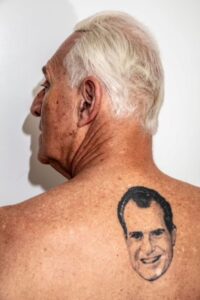 This has been Roger Stone’s plan all along since Nixon.
 The most successful con in American history laid bare
This whole distortion of Democracy started way before Reagan!
NetHappenings China, Russia, Florida, Antisemitic, Democracy, Bitcoin